
01Balanced supplementation
Described as addressing nutritional gaps caused by various conditions, especially vitamin and mineral deficiencies associated with reduced performance, product quality and feed efficiency.
Balanced nutrition for production and stress periods.
A vitamin, mineral, amino acid and electrolyte formula presented for poultry, livestock, special animal species and aquatic animals.
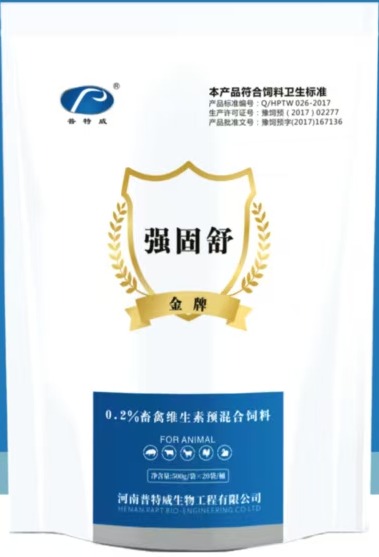
Described as addressing nutritional gaps caused by various conditions, especially vitamin and mineral deficiencies associated with reduced performance, product quality and feed efficiency.
The brochure describes 13 anti-stress vitamins acting together, with trace elements and amino acids helping balance body-fluid acidity and alkalinity during stress.
Components are packaged separately to avoid interactions, preserve product stability and effect, and allow separate or combined use.
The source describes flexible administration in drinking water or feed according to flock condition and management. It also describes use alongside cephalosporins, penicillins and fluoroquinolones, with claims for improved efficacy and a reduced risk of resistance.
Vitamins A, D3, E, C, K3, B1, B2, B6 and B12; folic acid; nicotinamide; calcium D-pantothenate; betaine; DL-methionine; L-lysine; copper sulfate; ferrous sulfate; zinc sulfate; manganese sulfate; cobalt chloride; potassium iodate; lactose; sodium chloride; glucose.
The brochure describes use across production stages to improve performance. It recommends seven days before and after parturition to reduce birth-related stress and fatigue; seven days before and after weaning to reduce declines in appetite and disease resistance; and 7–14 days before marketing during finishing to improve feed efficiency and fattening.
Presented for stress associated with heat, severe cold and climate changes; before and after regrouping, pen separation and vaccination; and during disease outbreaks, with claims for improved overall herd disease resistance.
Described for adjunct use in disease treatment and health-maintenance programs. The source reports that combining it with antibiotics may reduce resistance development, and that use during convalescence may accelerate recovery.
| Animal group | Product per 1,000 kg of feed |
|---|---|
| Poultry: chickens, ducks and geese | 200 g |
| Breeding and laying poultry | 250 g |
| Pigs, cattle and sheep | 250 g |
| Special animal species | 200–250 g |
| Aquatic animals | 250–300 g |
Equivalent to 500 g per 4,000–5,000 kg of water. Use for 3–5 consecutive days; the brochure states that use may be repeated.
500 g per bag; 20 bags per drum.